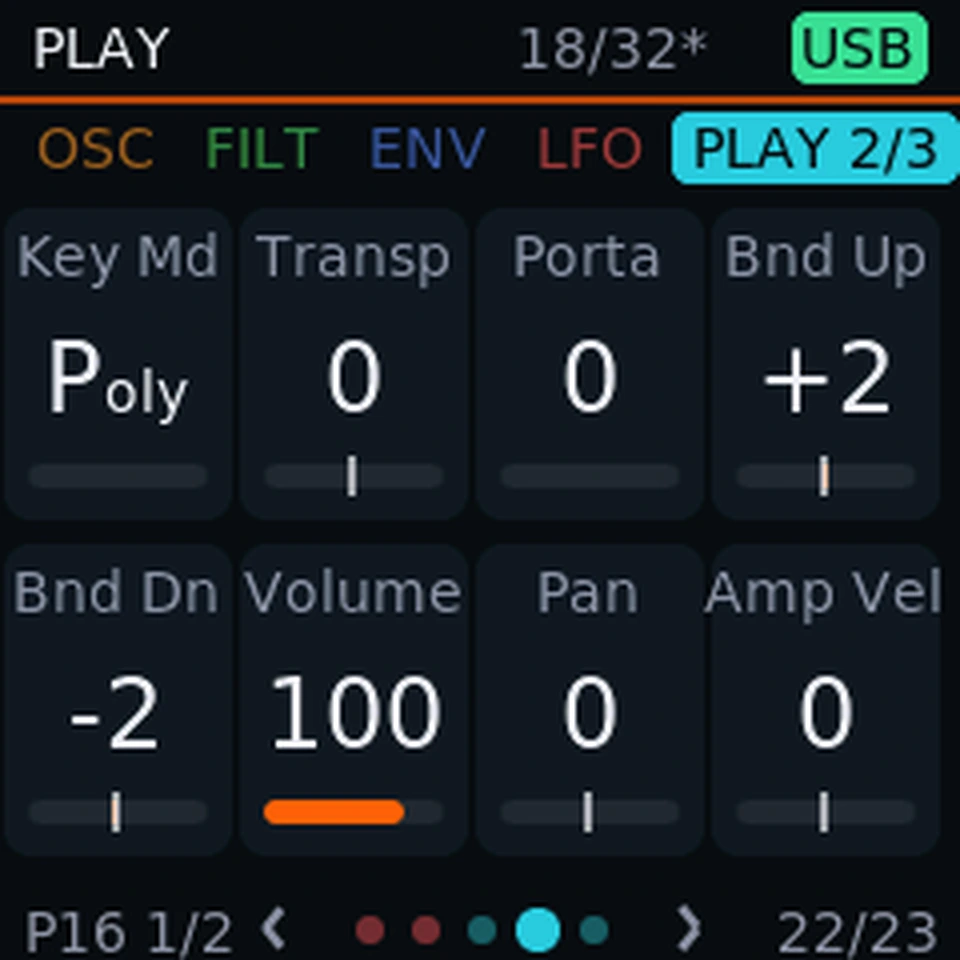
Play
Play it. Shape it. Keep it moving.
An arpeggiator with a step layer, a modulation matrix you can hear, and keys that feel the way you set them.
Arpeggiator
A step layer under every pattern.
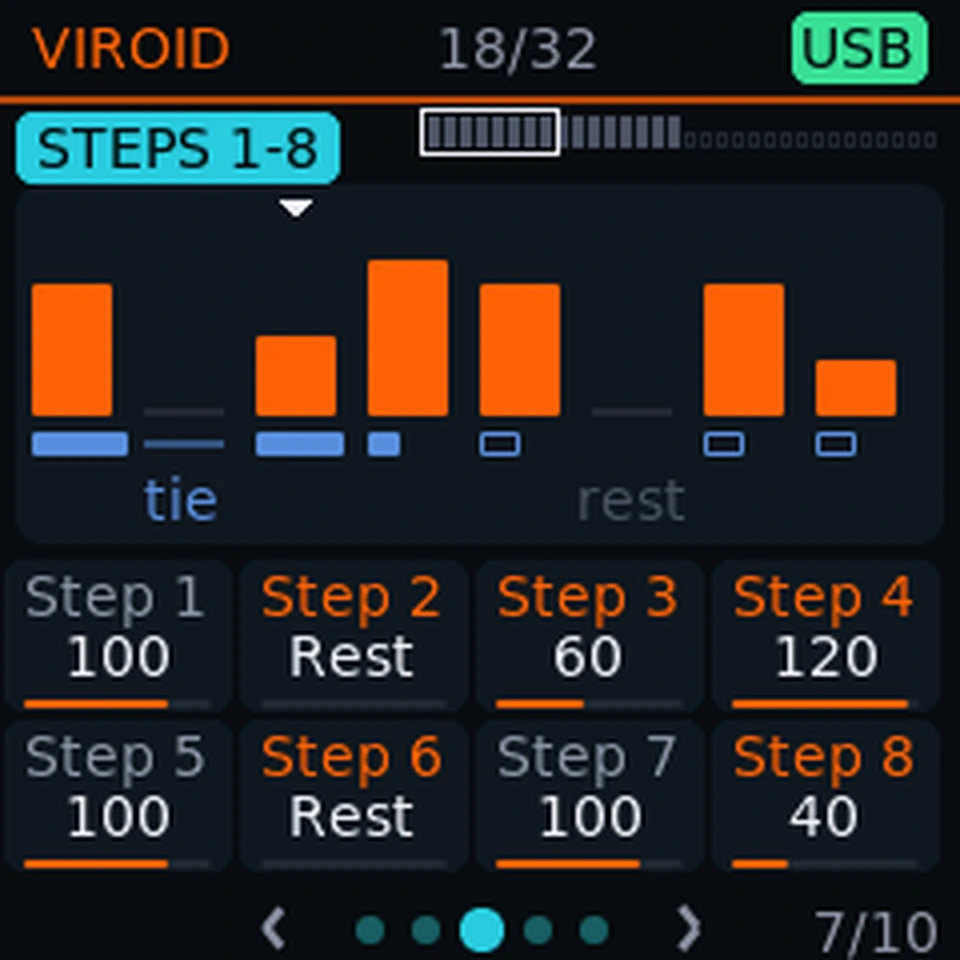
Up to 32 steps, each with its own level, a gate in percent and ties between notes. Patches bring their own arpeggiator settings with them. Around the pattern sits a set of helpers that make it sound played, not programmed.
- Strum: the held chord rolls out like a guitar, with spread, direction and curve, on the steps you choose. It can strum chords you play with the arp off, too.
- Human: small late-only shifts in timing, velocity and gate, so a pattern breathes.
- Rhythm: Euclidean hits spread over the grid, with rotation, a chance per hit and an accent.
- Evolve: the pattern drifts by itself and returns, and you freeze it when it sounds right.
- Directions beyond up and down: Thumb, Pinky, Converge, Diverge, your own pattern and four kinds of random.
Modulation matrix
Six slots. Forty sources. Chain them.
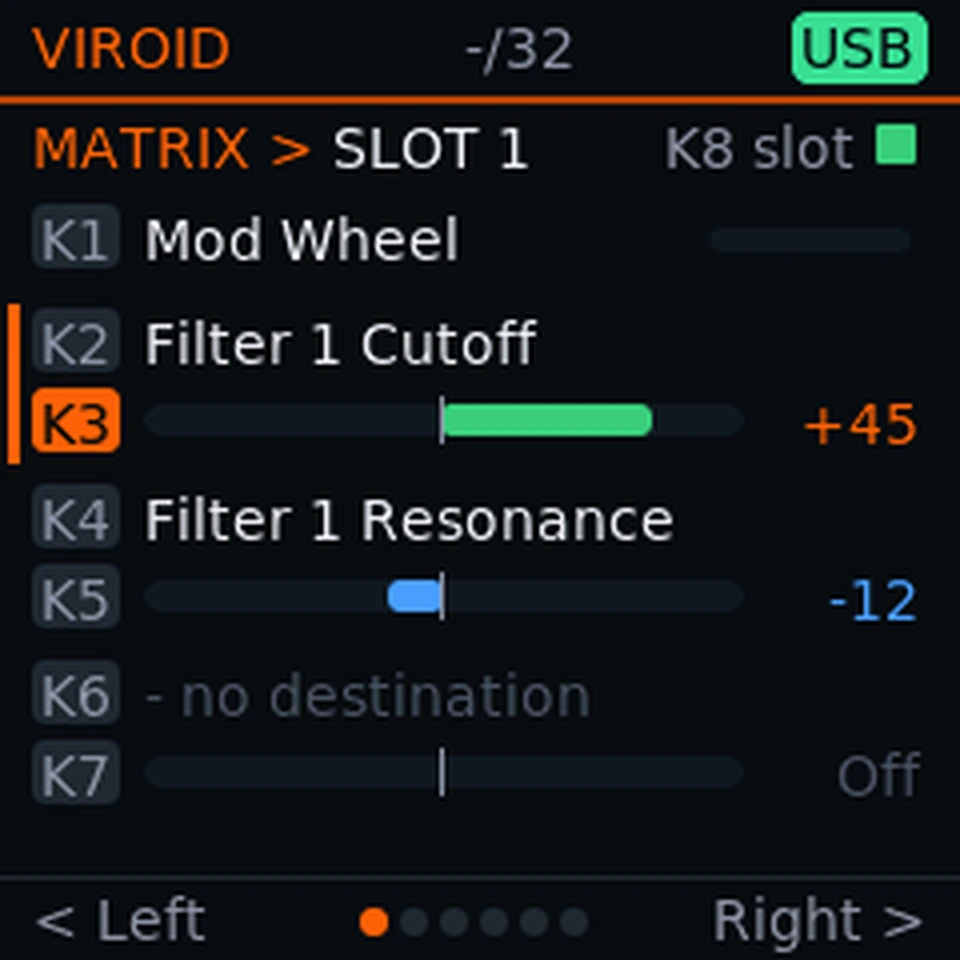
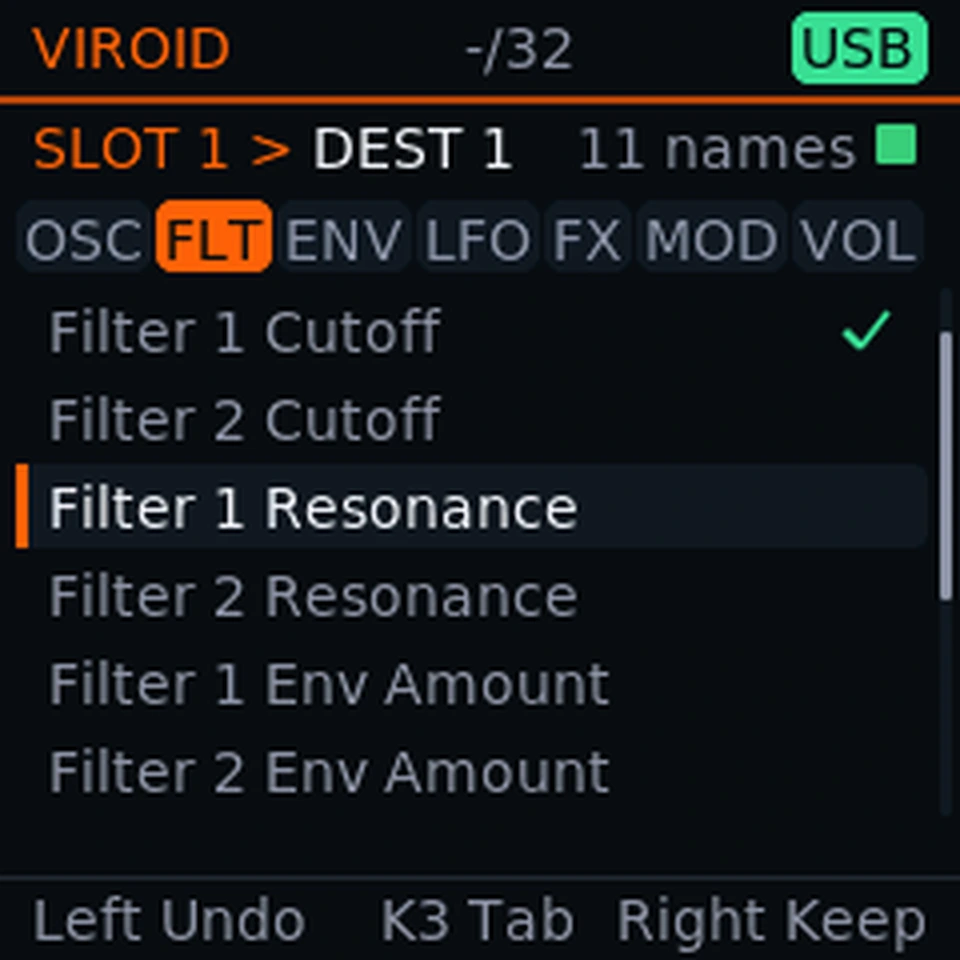
Every Virus patch carries a matrix: each slot takes one source and up to three destinations. More than ninety destinations already sound, from filter cutoff and oscillator pitch to effect levels.
- Routes can modulate other routes, so one slot can change how much another does.
- The highlighted destination applies as you browse, so you hear it before you choose.
- Hold Oct- and press Right to switch the whole matrix off and on and compare.
Keys and hands
Set the keyboard the way you play.
Eight knobs and four faders for the sound, two wheels for the feel, and settings for how the keys behave.
- Key modes: Poly, four Mono modes and Hold, which keeps a chord sounding until the next one.
- Pitch bend range up and down, with a bender curve that is finer near the centre, as on the Virus.
- Knob speed from one step per click to Turbo, so long lists and small values both feel right.